
What we do
Latest Programmes
Click the + below for more
Advanced Clinical Care
Strengthening Frontline HIV Care Where It Matters Most
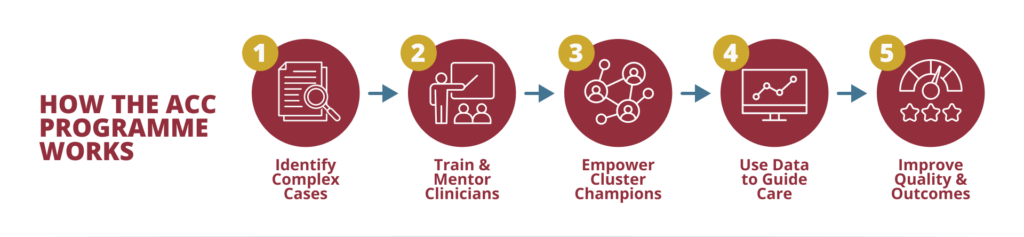
Kheth’Impilo’s Advanced Clinical Care (ACC) Programme strengthens the management of complex and advanced HIV and TB/HIV cases within South Africa’s public health system.
Working alongside National, Provincial and District Departments of Health, we strengthen clinical decision-making at primary healthcare level.
This enables frontline healthcare workers to identify, manage, and appropriately refer patients with Advanced HIV Disease (AHD), leading to improved treatment outcomes and reducing preventable illness and mortality.
The Challenge
Despite progress in HIV treatment, Advanced HIV Disease continues to drive preventable morbidity and mortality.
The ACC Programme addresses:
- Delayed diagnosis of advanced disease
- Treatment failure and unstable HIV cases
- Opportunistic infections linked to AHD
The ACC Cluster Champion Model
At the heart of the programme is the ACC Cluster Champion approach.
Cluster Champions are facility-based clinicians who:
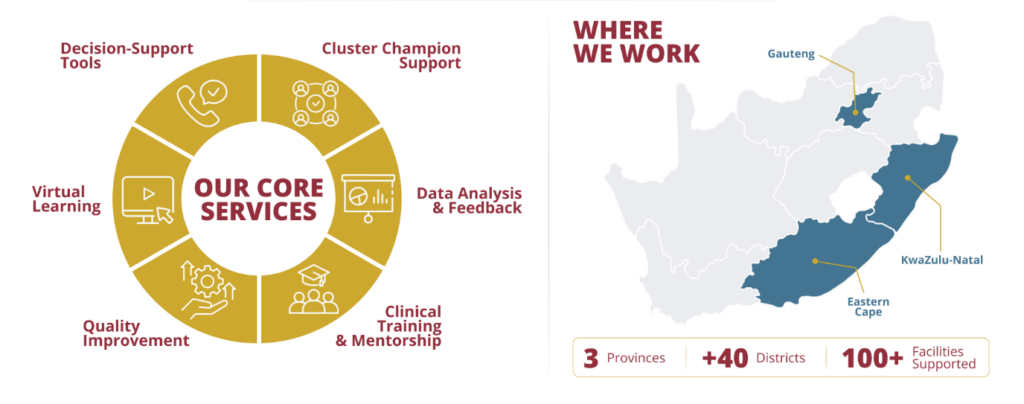
- Lead peer-to-peer case discussions
- Support colleagues in managing complex patients
- Cascade updated clinical guidance
- Drive continuous quality improvement
- Strengthen district-level clinical networks
This model ensures skills transfer is embedded locally — building long-term resilience within the public health system.
Our Impact
Through strengthened clinical capacity, improved data use, and locally led mentorship, the ACC Programme contributes to:
- Earlier identification of Advanced HIV Disease
- Improved treatment outcomes for complex patients
- Reduced HIV-related morbidity and mortality
- Increased confidence among primary healthcare clinicians
- A more resilient and responsive public health system
The programme strengthens systems — not just individual facilities — ensuring sustainable improvement in advanced HIV care.
Community-Orientated Primary Care (COPC)
Bringing healthcare closer to where people live.
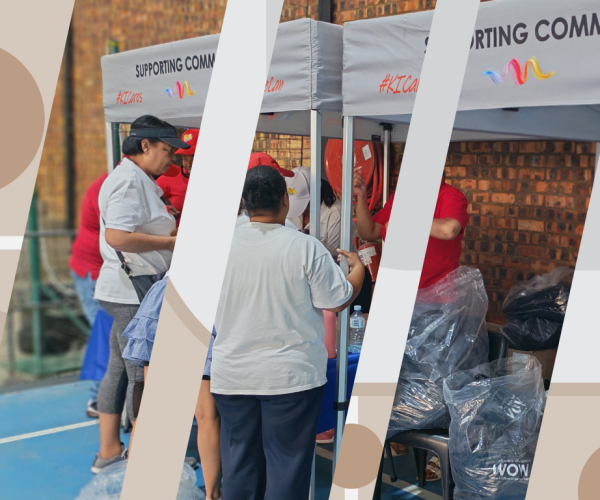
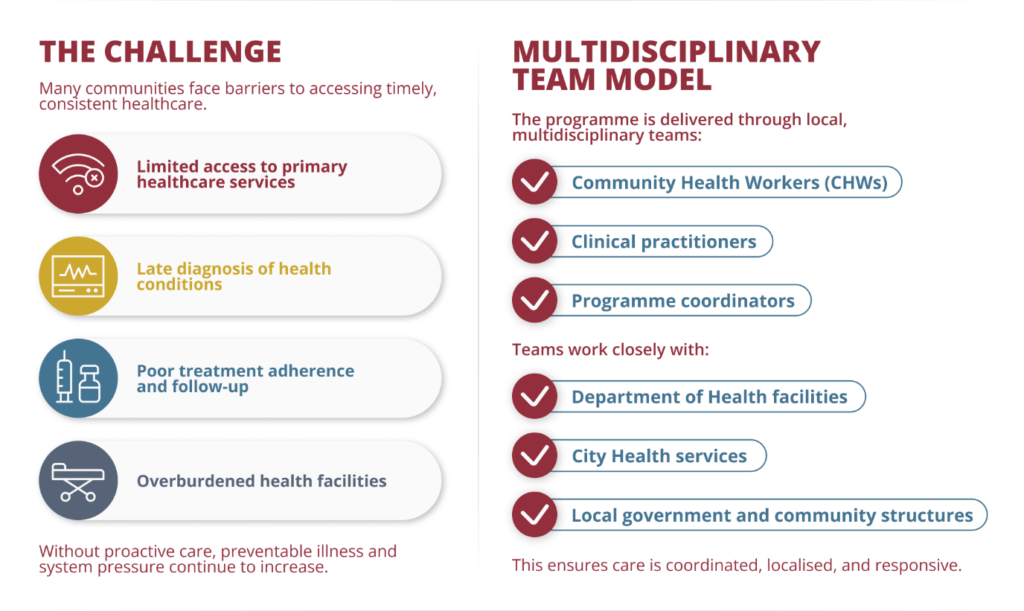
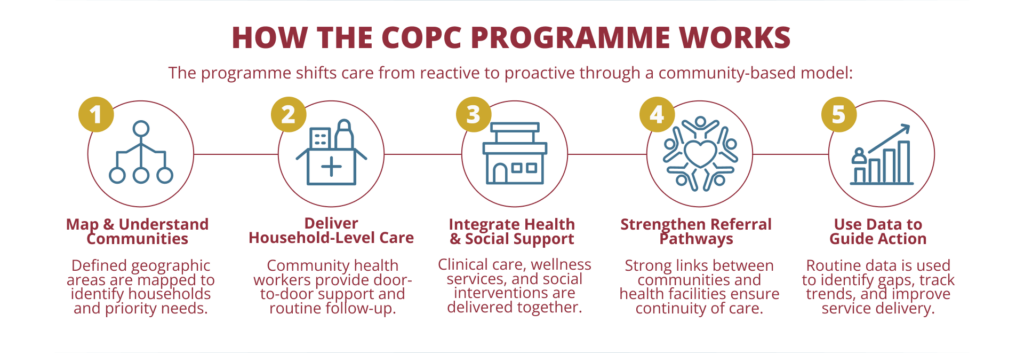
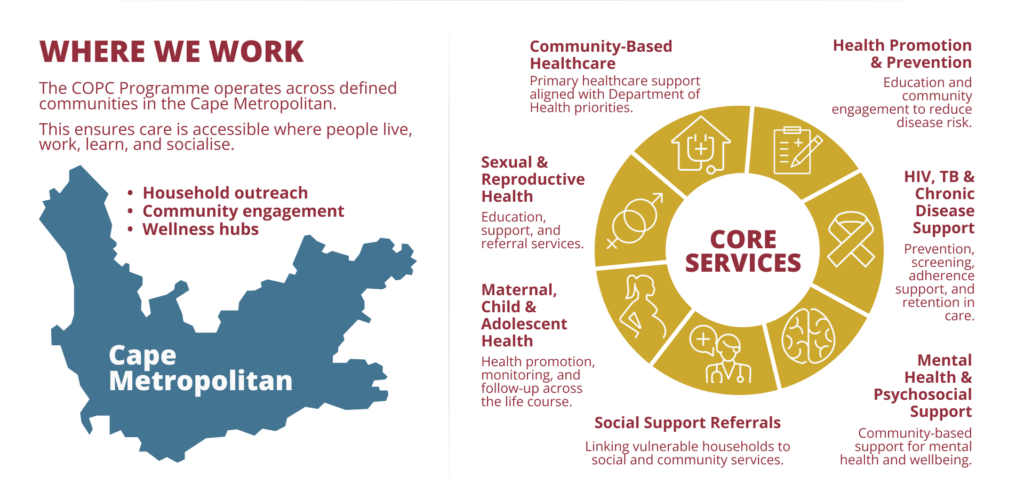
The COPC and Wellness Services programme delivers integrated, person-centred primary healthcare across communities in the Cape Metro.
Aligned with the Western Cape Department of Health framework, the programme combines community outreach, wellness services, and facility collaboration to address both health needs and social determinants of health.
Our Impact
Through proactive, community-based care, the COPC Programme contributes to:
- Improved access to primary healthcare
- Earlier detection and prevention of disease
- Improved treatment adherence and continuity of care
- Reduced pressure on health facilities
- Stronger, more resilient community health systems
The programme shifts healthcare upstream — improving outcomes while strengthening the entire system.
Commitment to Sustainable Community Health
The COPC Programme is designed to be scalable, sustainable, and aligned with national and provincial strategies.
By integrating community-based care with facility systems, it supports healthier individuals, stronger families, and more resilient communities.
Community Health Workers & Disaster Response Research
Understanding frontline resilience in times of crisis
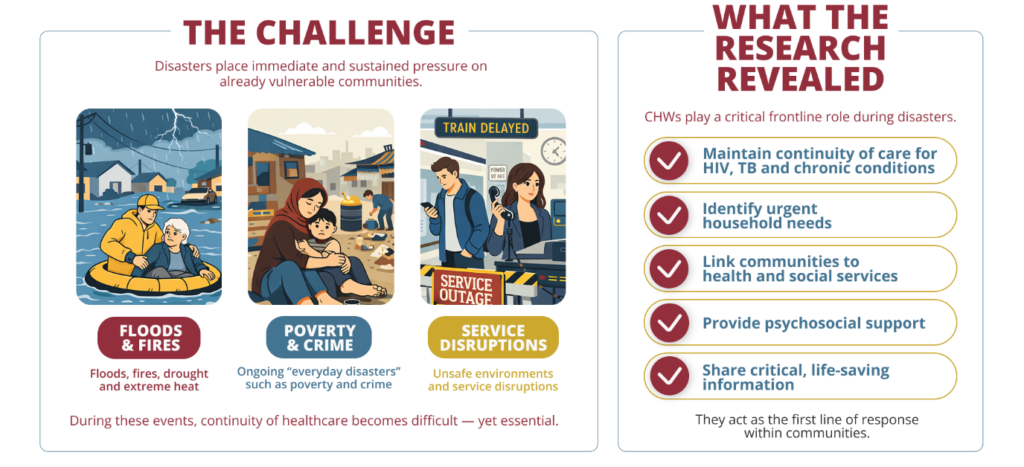
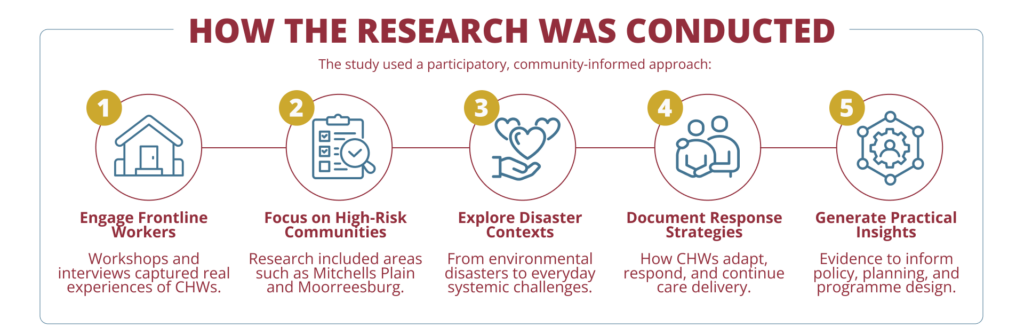
Kheth’Impilo supported collaborative research exploring how Community Health Workers (CHWs) respond to disasters while continuing to deliver essential care in vulnerable communities.
Conducted in partnership with the University of Cape Town and Western University (Canada), the study focused on lived experiences of CHWs across the Western Cape.
The Reality on the Ground
Despite their role, CHWs face significant challenges:
- Unsafe working environments
- Extreme weather and infrastructure barriers
- Emotional and psychological strain
- Limited protective equipment and support
Yet they continue to adapt through teamwork, community networks, and personal commitment.
Why This Matters
This research highlights the need to better support frontline workers.
Key priorities include:
- Integrating CHWs into disaster preparedness planning
- Strengthening protective and psychosocial support
- Improving coordination across health and social systems
- Building more resilient, community-based response models

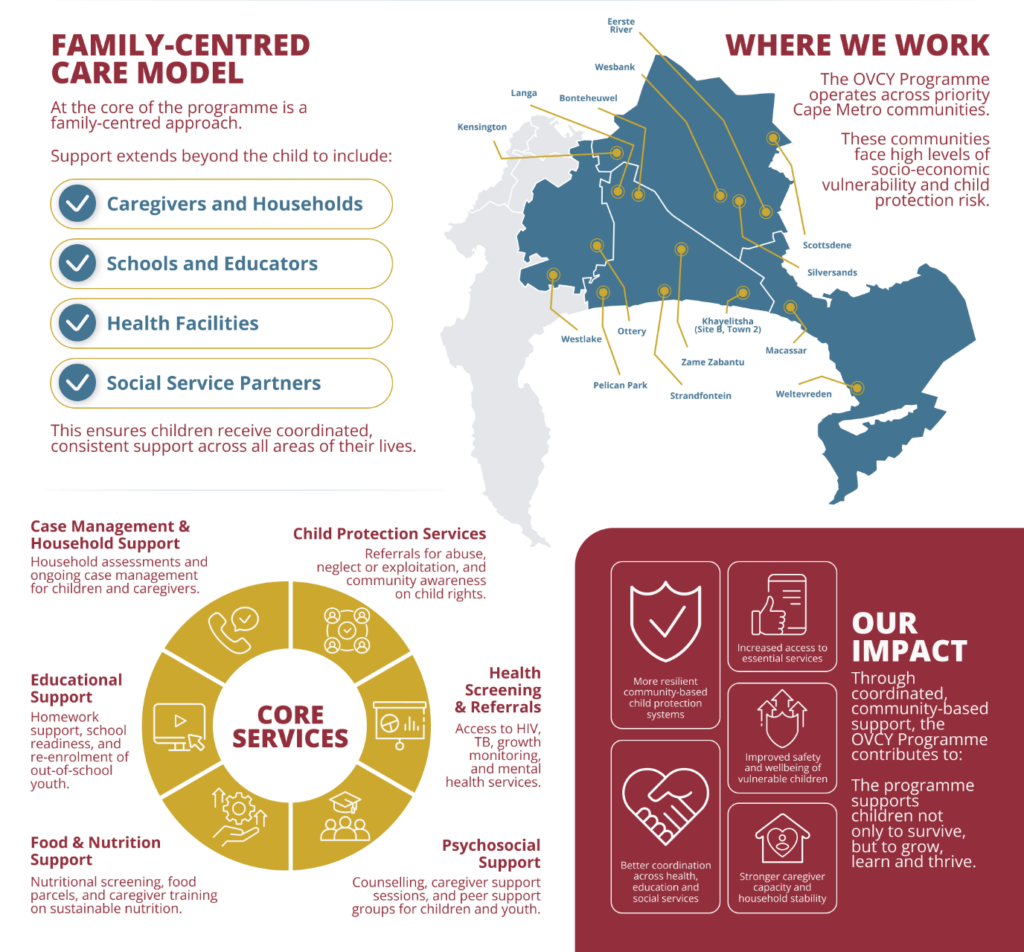
Orphans, Vulnerable Children & Youth Programme

The Challenge
Many children grow up in environments shaped by multiple, overlapping risks.
These include:
- Poverty and food insecurity
- Exposure to violence and substance use
- Limited access to health, education and social services

Without coordinated support, these risks impact safety, development, and long-term wellbeing.
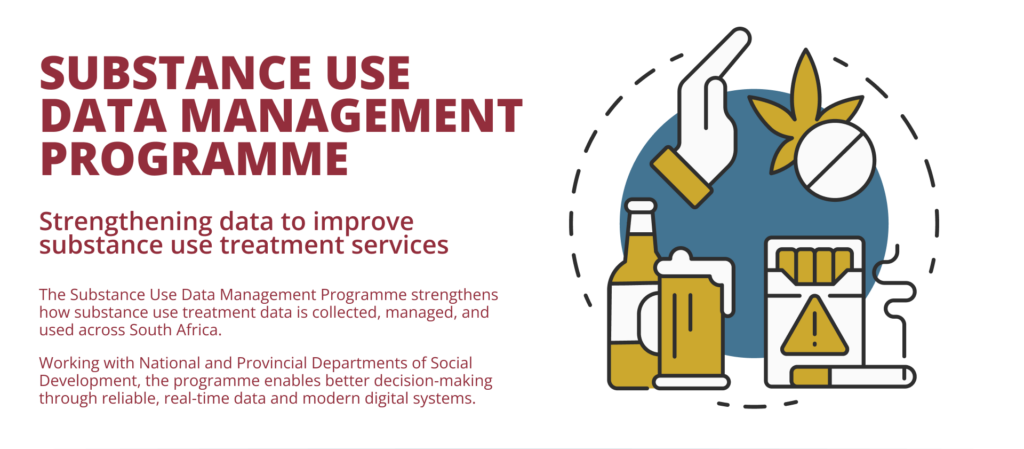
Substance Use Data Management Programme
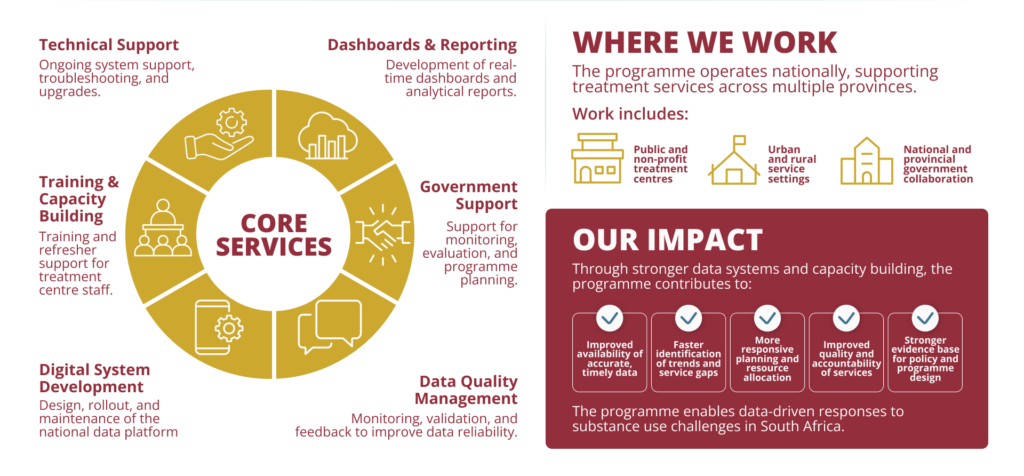
The Challenge
Substance use services often rely on fragmented, delayed, and paper-based data systems.
This leads to:
- Limited visibility into service utilisation and client needs
- Delays in identifying emerging substance use trends
- Inconsistent data quality across treatment centres
- Slower, less responsive decision-making
Without reliable data, effective planning and service delivery are compromised.
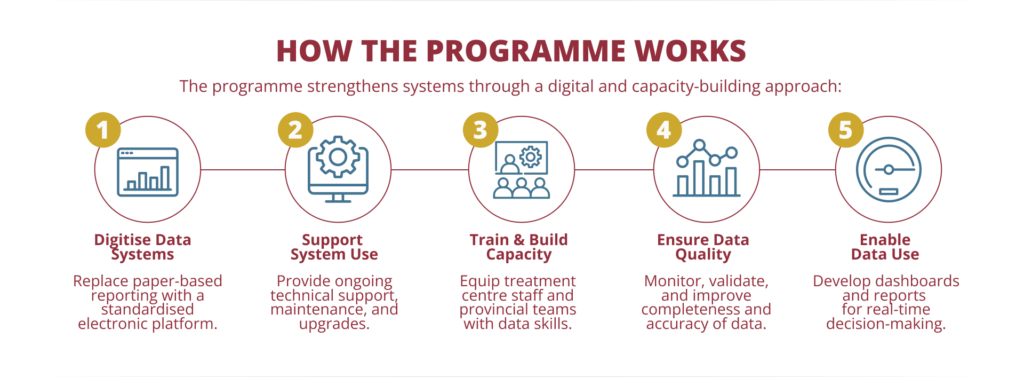
National Data System Model
At the core of the programme is a national digital data system.
It connects:
- Treatment centres
- Provincial teams
- National government
This enables:
- Real-time access to data
- Standardised reporting across provinces
- Improved coordination and oversight
IeDEA-SA
Kheth’Impilo is a collaborator with the International epidemiology Databases to Evaluate AIDS Southern Africa collaboration (IeDEA-SA) based at the University of Cape Town and University of Bern. IeDEA-SA undertakes research to improve the long-term delivery of HIV care and ART services. The overarching aims of IeDEA-SA are to conduct clinical, epidemiological and health services research in order to provide answers to the questions that clinicians, programs and ministries of health consider fundamental to HIV care and treatment strategies in Southern Africa; to inform HIV/AIDS, TB, and mental health service delivery in the region, to increase the capacity for delivering antiretroviral therapy (ART), and, ultimately, to improve the prognosis of people living with HIV and AIDS in Southern Africa.The combined database includes individual-level data on more than 640,000 adults and children on ART in 17 large collaborating cohorts in Malawi, Zambia, South Africa, Mozambique, Lesotho and Zimbabwe.
link: https://www.iedea-sa.org
Message from our CEO

I think one of the biggest challenges facing any healthcare practioner or healthcare worker coming into these areas is getting to understand the chaotic nature of life in communities that have been subjected to multiple generations of trauma.
“I think if one is true to oneself and give yourself space and time to just ask the questions as to what else is needed? And how do we do this? What is it that we can do? And you find the solutions and you go for it. And you mustn’t give up faith and trust in that intervention, especially when people are benefitting from it. It’s one of these universal laws that if we look after other people well and as best as we can with integrity and honesty, you are on the right track.
The possibilities that open when you are doing this, it’s like amazing. So you always know that, one thing I’ve learnt is that there will always be space to be innovative, when it comes to helping other people and that in itself is immensely rewarding.”
Dr. Ashraf Grimwood
CEO – Kheth’Impilo Aids Free Living
Your Support is Welcomed
Through data, research, and community action, we are advancing an AIDS-free generation across South Africa.
Our Impact
Significant Past Projects
Click the + below for more
Health System Strenghtening
Health system strengthening (HSS) includes all activity designed to improve the capacity of a health system to deliver healthcare services and achieves the desired health outcomes for the population it serves. Kheth’Impilo’s approach to Health system strengthening has been to work from the position of “know” which means understanding the health system we are to strengthen, towards the outcomes we hope to see, being the “expected” position.
The HSS program was initiated with a basic baseline health system assessments in the supported districts. These assessments assisted with a better understanding of some of the system issues that need strengthening.
Assessment: >> Determinants < > Processes < > Outcomes
Through the knowledge gained, our HSS implementation strategy was modeled on; Capacity building, quality improvement & increased access.
Several healthcare workers (HCWs) where trained on the many areas of healthcare they provide to the populace. These trainings are complemented with structured mentorship that ensure grounding of knowledge. Some of these include “NIMART” training and mentorship, “leadership & governance” training for District and facility managers, “use of information for management” training for managers among many others.
In addition, quality improvement projects were rolled out across the districts to improve; Viral load uptake, HIV 18 months antibody test rsate, IPT uptake rate. These activities has seen KI get involved at the service delivery level in an effort to further improve quality of care provided by the health system. Our Pharmacy staff consistently carry out audit in-pharmacy prescriptions, clinical folder and data quality audits and subsequently assisted facilities to institute corrective measures to improve areas of identified gaps.
In improving access, KI provides support to facilities who provide ART services. These include, setting up ART adherence club in facilities to ensure clients receiving ART are not lost in care and through the reduced patient load, new clients are able to access treatment in supported facilities.
The HSS program also provides support to the Health information system, key among these are the installation and sign-off of the Tier.net which is the National platform for HIV data management. Several districts supported are now able to review their data for better programme management and planning.
Keeping Negative Pregnant Women Negative
Executive summary
This report outlines the program progress/achievements of Kheth’Impilo (KI) continuous work with the Department of Health (DOH) various other relevant Departments, communities and key stakeholders as well as beneficiaries to ensure access to and provision of comprehensive health care solutions for HIV/AIDS and, care and support services for pregnant negative women attending antenatal care to remain negative until they deliver and up to post weaning
The report covers activities for the period of January to June 2016 and summarizes the progress made on implementation of the work plan activities.
Project Description:
The “Keeping Negative Pregnant Women Negative” program is an initiative at the Inanda C Community Health Centre, Ethekwini, Kwa Zulu Natal for pregnant women and adolescents. Pregnant women who attend antenatal care at this facility and adolescents in schools who give permission will receive a Patient Advocate (PA), who will visit their homes every three months until the baby is 18 months old. The PA is a lay health worker who will give advice regarding pregnancy and infant health and feeding, and how to prevent HIV. Women and adolescents who give permission will also receive counselling and testing for HIV during the home visit, adolescent will be refered to facility for sexual and reproductive health services . The
PA will also give advice to partners regarding HIV and sexual health. Men who give permission will also receive counselling and testing for HIV, and referred to the clinic for further treatment if required. This project supports health literacy and health promotion to adolescents, non-pregnant women, pregnant women, partners and children focusing on specific positive prevention interventions. A critical component of this integrated prevention strategy is HIV and AIDS Counselling and testing campaign (HCT), ensuring that negative pregnant women and their partners are tested at 12 weeks intervals.
Stay One Step Ahead Of Disease
Get access to our library of reports, training materials and research publications.
Address
6 Melbourne Road, Woodstock, Cape Town, 7915
Call Us
+27 (0)21 410 4300
Email Us
info@khethimpilo.org